 English
 Español
 Deutsch
 Français
 Svenska
 Dansk
Dansk
 Norsk
Norsk
 Nederlands
 Polski
 Čeština
 Português
 Ελληνικά
 Italiano
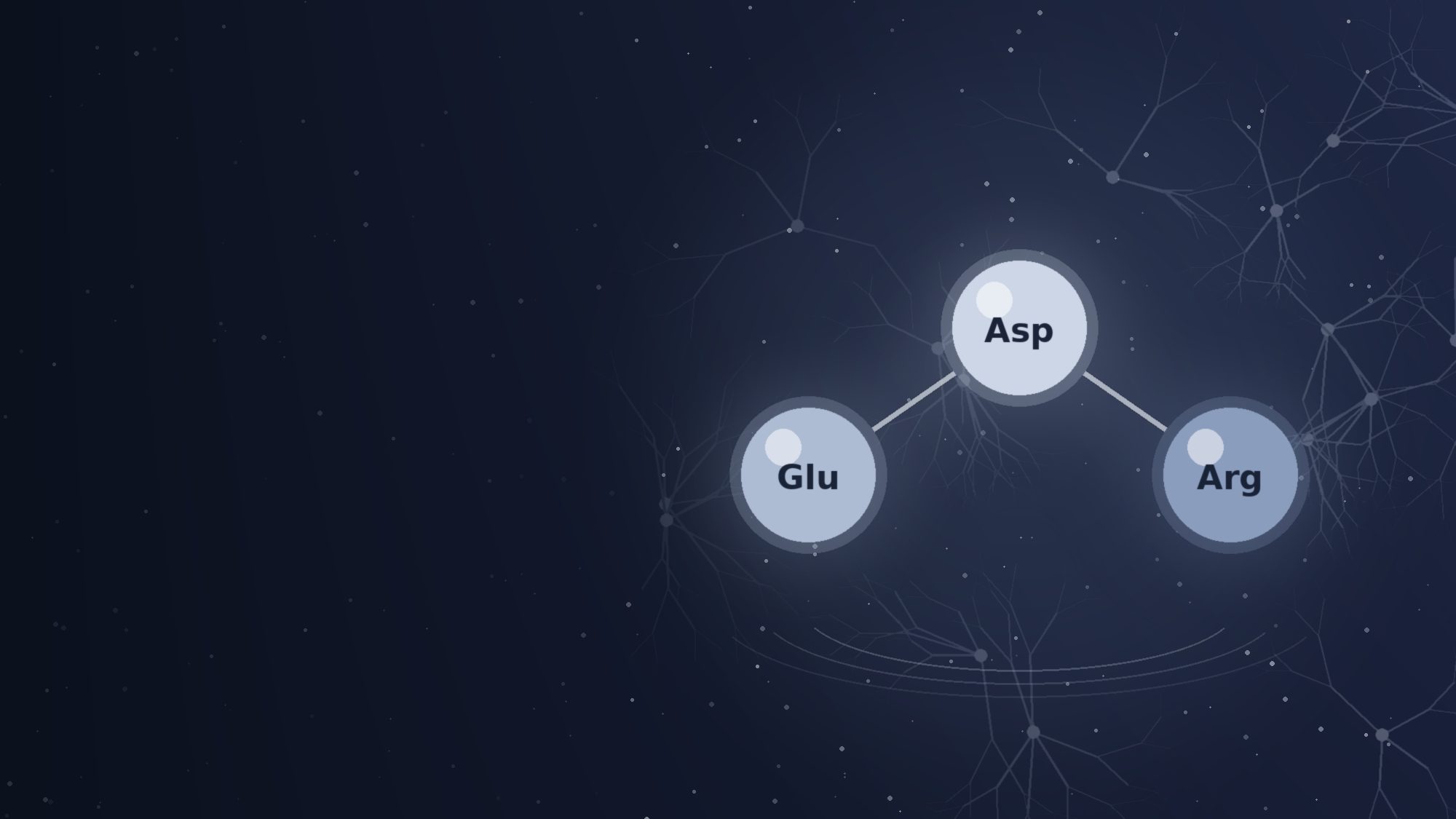
Pinealon is a lab-made chain of just three amino acids. Researchers in St Petersburg have tested it on nerve cells in dishes and on rats and mice, asking whether it helps those cells cope with stress. This site explains, without jargon, what the molecule is, who studied it and why the results are still early.
Pinealon is the name given to a synthetic tripeptide: glutamic acid, aspartic acid and arginine joined in that order. Scientists often write it with one-letter codes as EDR. It is one of a family of very short peptides that a Russian research network has been studying for decades, with a particular interest in the brain and the nervous system.
The idea behind the research is unusual. Instead of acting on a receptor on the cell surface, as many drugs do, these tiny peptides are proposed to slip inside cells and nudge which genes are switched on. Lab reports describe nerve cells that coped better with oxidative stress or kept more of their fine branches when Pinealon was added. Those are interesting signals, but they come from dishes, rodents and computer models.
That is the honest picture this guide tries to keep in view. Nearly every study comes from the same circle of St Petersburg laboratories, outside groups have rarely repeated the work, and there are no proper clinical trials. We describe what was reported, point out what is missing and leave the hype aside.
| What it is | A synthetic peptide of three amino acids |
| Sequence | Glu-Asp-Arg, often shortened to EDR |
| Where it comes from | Short-peptide research in St Petersburg, Russia |
| Main research focus | Nerve cells under stress, in dishes and in rodents |
| Human trials | No registered clinical trials found |
| Research grade | A white freeze-dried powder for laboratory use |
| Medicine status | Not an approved medicine in the EU, UK or US |
Pinealon.info explains research; it does not recommend anything. Research-grade Pinealon is meant for laboratories, not for people to take. If you have questions about memory, mood or brain health, a doctor is the right person to ask.